Imagine you have just invested a significant portion of your quarterly budget into a high-energy, day-long training workshop for your leadership team. The energy in the room is high, the notes are extensive, and everyone leaves feeling capable of taking on new challenges. Now, imagine checking back in with those same leaders just one week later and discovering that they have already forgotten sixty percent of the strategies discussed. This is not a failure of intelligence or a lack of interest on your staff’s part. It is a biological reality of how the human brain processes information. When we treat learning as a single event rather than a continuous process, we are essentially pouring knowledge into a leaking bucket.
Understanding the Reality of Information Decay
The human brain is naturally designed to discard information that it does not use immediately. This biological reality, often called the forgetting curve, means that a traditional seminar or a long-form video course has a very short shelf life. Without a reason to recall specific data within the first twenty-four hours, the brain begins to prune those details to make room for more immediate logistical tasks. This is a survival mechanism that helps us focus on our daily lives, but in a corporate setting, it leads to massive waste of resources, as knowledge simply evaporates.
This natural decay is the primary reason why many organizations find themselves retraining their staff on the same topics year after year. They are fighting against a neurological process that requires a deliberate intervention to stop. To keep information fresh, the brain must be prompted to recall it at specific intervals, which signals that the data is important enough to move from short-term memory into long-term storage. The challenge for modern businesses is to provide these mental triggers frequently enough to be effective without disrupting employees’ busy schedules.
The Strategic Shift to Microlearning
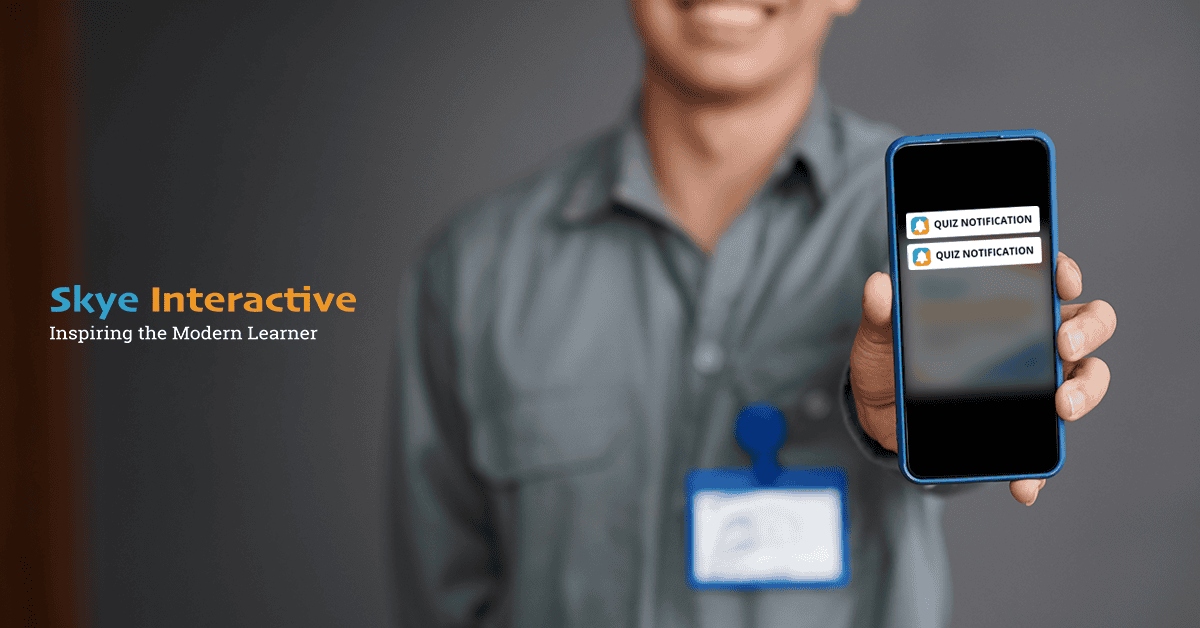
To address information decay, many companies are moving away from long, infrequent training sessions toward microlearning. This method involves delivering content in short, focused bursts that take only a few minutes to complete. Instead of a three-hour block of time, an employee might receive a two-minute quiz or a quick video summary sent directly to their mobile device or workstation. These small interactions fit easily into the workday without disrupting productivity. It allows the learner to stay engaged with the material without feeling like they are falling behind on their actual job responsibilities.
A successful microlearning strategy relies on several specific delivery formats to keep the information accessible and interesting. These methods include the following items:
- Interactive knowledge checks that require the learner to apply a concept to a real-world scenario.
- Short video explainers that break down a single complex task into simple, actionable steps.
- Infographics that provide a visual summary of key compliance or safety rules for quick reference.
- Daily push notifications that ask a single thought-provoking question to trigger mental recall.
- Peer-to-peer discussion prompts that encourage teams to share how they use the new information in the field.
By breaking information down into these manageable pieces, the system makes it easier for the brain to organize and store the data. The frequency of these interactions builds a habit of continuous learning rather than a cycle of cramming and forgetting. When employees interact with content in small doses, they are more likely to retain the core message because the cognitive load is kept at a minimum.
Reinforcement as a Tool for Application
The ultimate goal of any corporate training program is not just for employees to remember facts, but for them to apply those facts to their daily work. Microlearning excels at this by reinforcing the exact point of need. When a reinforcement module is delivered a few days after a major training event, it acts as a mental trigger. It forces the employee to think about the material in a new context and consider how it applies to the tasks sitting on their desk right now. This bridge between the classroom and the office is where the most significant professional growth occurs.
This connection between the lesson and the labor is where the real value of training is found. When reinforcement is consistent, the concepts become part of the worker’s natural workflow. They no longer have to stop and try to remember what was said in a meeting three weeks ago because the information is already top of mind. The knowledge is readily available because it has been reinforced through regular, bite-sized updates. This creates a workforce that is not only better informed but also more confident in their ability to execute complex tasks under pressure.
Creating a Culture of Continuous Improvement
When a company adopts microlearning, it sends a powerful message that professional development is an ongoing priority rather than a once-a-year requirement. This shift in perspective can have a profound impact on how employees view their own growth and their value to the organization. They begin to see training as a helpful resource that supports them daily rather than a boring obligation that pulls them away from their responsibilities. This leads to higher engagement rates and a more agile organization that can respond quickly to market changes.
Over time, this continuous approach builds a deep well of collective knowledge within the company. Because learning is ongoing, the organization does not suffer from the massive knowledge gaps that arise when key employees leave or new technology is introduced. Everyone is constantly staying updated in small, manageable increments. This keeps the entire team aligned and ensures that the standards of excellence are maintained across every department. It transforms the idea of training from a chore into a competitive advantage that fuels long-term success.
If you are ready to break the cycle of information loss and build a training program that actually sticks, reach out to the Skye Interactive team. We would love to talk to you about our content development process and show you exactly how to integrate microlearning into your current workflow to see lasting results.